Many people say "shampooing" for any kind of carpet washing. Yet two companies that advertise carpet shampooing do not always do the same job: one brushes a foam into the fibres, the other injects a solution and pulls it back out right away. These methods do not use the same amount of water, do not dry at the same pace and do not suit the same carpets. Knowing what each word means helps you understand what will be done in your home. Our page on carpet and rug cleaning presents the service itself.
Carpet shampooing, in the strict sense
In the strict sense, shampooing is an old method. A foaming product is applied to the carpet, then a rotary brush machine works it into the fibres and makes it foam. The foam wraps around the dirt. Once it is dry, it is vacuumed up, along with the dirt it holds.
This method uses little water, which shortens drying. Its limit is the product: what the vacuum does not pick up stays in the fibres. The Carpet and Rug Institute, the American carpet industry association, notes in its spot removal guide that several of the solutions it presents leave residues that can attract dirt (consulted in October 2026). A product that is not fully removed can have the same effect: the carpet looks clean the same day, then gets dirty faster.
In everyday speech, the word has taken on a wider meaning. As of October 2026, several machines sold or rented as "carpet shampooers" actually inject a solution and pull it back out: they do extraction. When a company talks about shampooing, simply ask what its machine does.
Extraction: inject, then pull out
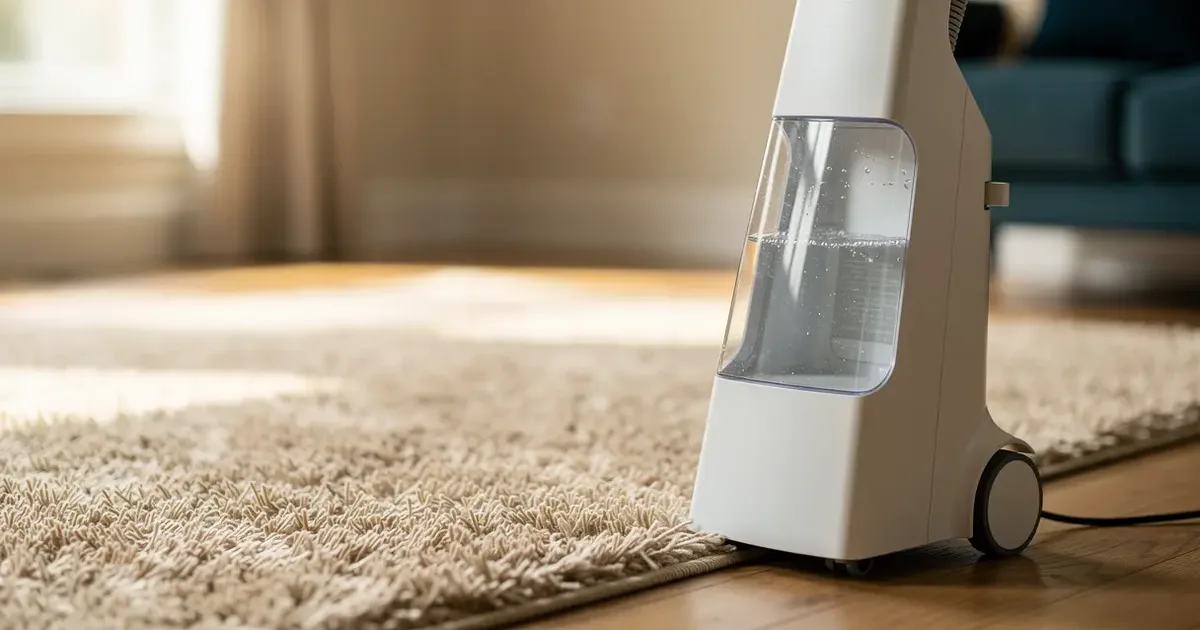
Extraction is done with an extractor, a machine that injects a cleaning solution into the fibres and pulls it back out almost right away. The loosened dirt leaves with the liquid, into the recovery tank. In many cases, a product is applied first to loosen the dirt, then worked into the fibres before the extractor goes over the carpet.
Its strength is that return: a good part of what goes into the carpet comes back out, with the dirt. Its limit is water. If too much water stays in the carpet, drying takes longer and the underside can stay damp longer than the surface.
Our article on renting a machine or hiring a professional explains what happens when a carpet stays too wet and how to limit residues. If you are hesitating between renting a machine and calling us, start there.
Low-moisture methods
Other methods use very little water. They work mostly on the surface and dry quickly:
- encapsulation: a product is brushed into the carpet and, as it dries, forms crystals that hold the dirt and are vacuumed away, as the Wikipedia article on dry carpet cleaning summarizes (consulted in October 2026);
- the bonnet: an absorbent pad, mounted under a rotary machine, rubs the surface and holds the dirt found there;
- absorbent powder: a slightly damp powder is brushed into the fibres, then vacuumed up.
These methods are mostly used to keep high-traffic areas presentable. In its CRI 205 residential care standard, the Carpet and Rug Institute distinguishes interim cleaning, done between visits, from the periodic deep cleaning entrusted to a professional (consulted in October 2026). To plan how often to do each, our article on cleaning frequency gives some guidelines.
| Method | What happens | Water left in the carpet | What needs attention |
|---|---|---|---|
| Shampooing, in the strict sense | A foam is brushed into the fibres, then vacuumed up once dry | Little | The product that stays in the fibres |
| Extraction | A solution is injected, then pulled out by the same machine | More, depending on the technique | Drying, especially the underside of the carpet |
| Encapsulation, bonnet, powder | A product or a pad holds the surface dirt | Very little | Dirt lodged deeper in the fibres |
Why no method suits every carpet
For carpet washing, the IICRC publishes the ANSI/IICRC S100 standard, a recognized reference in the professional cleaning industry. According to a summary of the standard published by Carpet Cleaning Authority, as of October 2026, the S100 sets results to reach (dirt removed, residues, drying) rather than a single method.
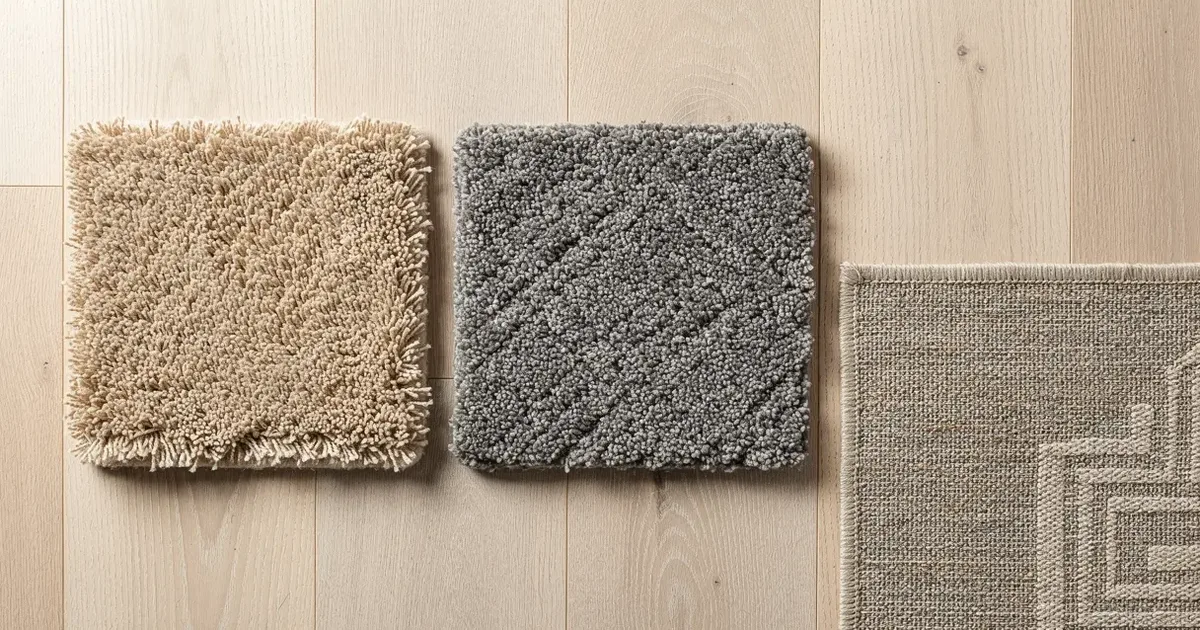
At Textilo, the treatment is also decided by the textile: before every cleaning, we assess the textile, then we choose the products and the amount of water. A wool carpet in a bedroom and a synthetic carpet in a poorly ventilated basement do not call for the same treatment, or the same amount of water.
What we look at before choosing
Our method follows five steps: inspection, assessment of the situation, choice of treatment, execution, then evaluation of the results. The choice of treatment comes after the first two. During the inspection, we look at:
- the fibre, shown on the label when there is one, because wool and synthetic fibres do not react the same way to water and products;
- the construction: cut or loop pile, wall-to-wall carpet laid over an underlay, or area rug;
- the kind of soil: dust, body oils, stains or odours;
- the high-traffic areas, where dirt and wear build up;
- the products already tried on a stain, if any;
- the room itself, because a poorly ventilated basement dries more slowly than a room with a window.
We work with an EDIC Galaxy 2000IX-HR extractor. The treatment, the products and the amount of water depend on what the inspection showed. If your carpet needs special care, or if we cannot treat it, we tell you before we start. The detail of each step is in our method.
What may stay after cleaning
A well-chosen method often improves the look of a carpet a great deal. It still has limits. Some old stains come out completely, others only fade. Discolouration caused by the sun or by a product stays discolouration.
In a high-traffic area, crushed or worn fibres can keep a duller look, because cleaning removes the dirt and does not rebuild the fibre. We tell you during the inspection, before the first step. You know what to expect before we begin.
If you are wondering whether it is better to clean or replace a tired carpet, our article on maintaining rather than replacing gives some guidelines.
Before choosing a method
Take a wide view of the room, a close-up of the stains and a photo of the label if you find it. Note what caused the stains, the products already tried and whether a rented machine has already been run over the carpet. These details help choose the treatment.
Our article on photographing a textile explains how to frame each photo.
Frequently asked questions
Are shampooing and extraction the same thing?
Not strictly. Shampooing brushes a foam into the fibres, then vacuums it up once it is dry. Extraction injects a solution into the carpet and pulls it back out right away, with the dirt. In everyday speech, the word "shampooing" often covers both.
Which method dries fastest?
Methods that use very little water, such as encapsulation, dry faster. After an extraction, drying depends on the fibre, the amount of water, the airflow and the room. Before we leave, we tell you when you can walk on the carpet and put the furniture back.
Does one method suit every carpet?
No. The choice depends on the fibre, how the carpet is made, its condition and the kind of soil. That is why we inspect the carpet before choosing the treatment.
Do all stains come out if the method is well chosen?
Not always. Some stains come out completely, others only fade, and discolouration can be permanent. We tell you during the inspection, before we start.