The carpet in a basement and the carpet on the stairs leading to it are often the same carpet, laid the same year. They don't wear the same way, and they aren't cleaned in quite the same way either. The service itself is described on our page on carpet and rug cleaning in Sherbrooke.
For a carpet cleaning, we always follow the same five steps: inspection, assessment of the situation, choice of treatment, execution, then evaluation of the results. In a basement and on stairs, four things change: the underlay, the steps, the furniture that stays in place and the drying. Our article on carpet cleaning at home describes the whole visit. This one looks only at what is particular to these two places.
What we look at first on a fitted carpet
A wall-to-wall carpet is fixed to the floor, with an underlay between the two. It stays in place during the cleaning, so everything is done from the top.
During the inspection, we look at the fibre, the pile height, the walkways and the edges along the walls. In a basement, foot traffic often gathers between the bottom of the stairs, the sofa and the television. Those paths show up as darker or more crushed strips. We also note any marks, what caused them if you know, and the products already tried on them.
The underlay matters too. It is the layer of foam or felt under the carpet, called "thibaude" in Quebec. We try to keep the water in the fibres, where the dirt sits, and to stop it from going down to the underlay. A carpet that receives less water dries faster. At the end of the inspection, you know what we are going to treat and what may stay.
The stairs, one step at a time
A carpeted staircase takes the traffic of the whole house on a small surface. Every step lands in the same place: the nosing, the rounded edge at the front of the step. That is often where a carpet fades, flattens or wears first. The riser, the vertical part, takes the kicks and the rubbing of shoes instead.
A step is a small surface, surrounded by edges and corners. We treat them one by one, nosing and corners included, along the wall as well as along the handrail. The choice of products and the amount of water follow the same assessment as for a room: the fibre, the condition of the carpet and the kind of soil.
A worn or crushed fibre on the nosing stays visible after cleaning, because the fibre itself has changed. Cleaning removes the dirt that darkens the step. It does not put fibre back where it has gone, and we tell you so during the inspection.
Between two cleanings, vacuum the stairs. The Carpet and Rug Institute (CRI), the American carpet industry association, advises vacuuming slowly, in overlapping passes, right up to the edges (CRI care tips, consulted in October 2026).
Furniture that stays in the basement
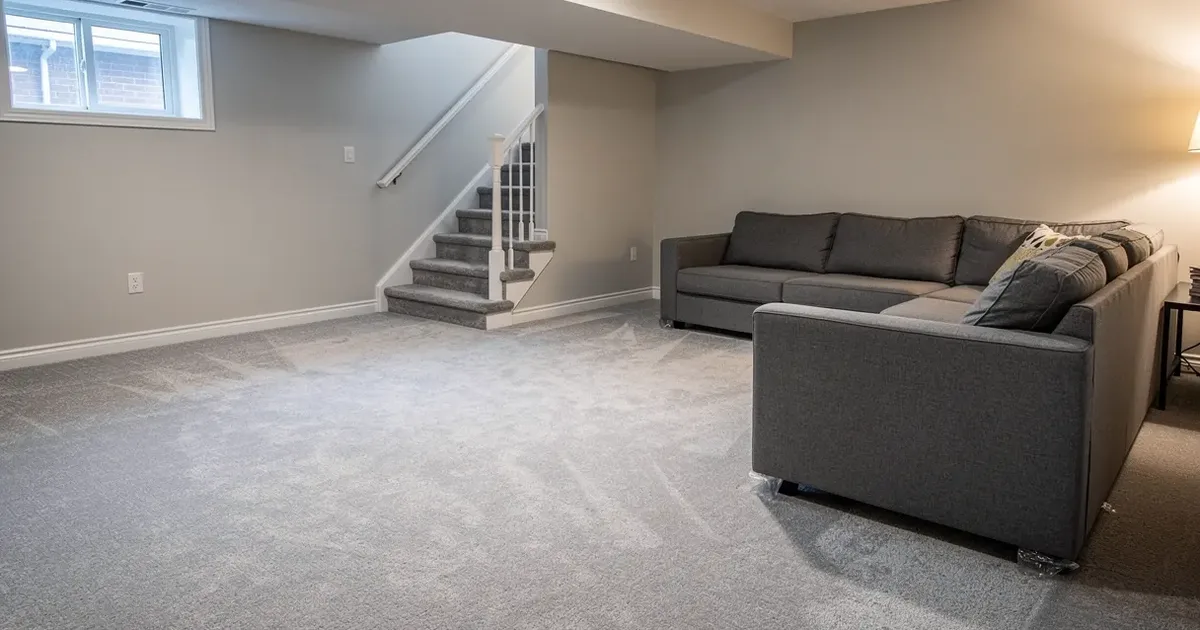
A finished basement often keeps its heavy furniture: a sectional sofa, a TV unit, an exercise machine. Many pieces are hard to move, and you don't have to empty the room.
There are two ways to go about it. We can clean around the furniture that stays in place. We can also move it on request. This service is not part of the basic service and is added to the price. Decide in advance which pieces stay in place and which have to be moved.
Under a piece of furniture that hasn't moved in years, the carpet often keeps its original colour and height. The surrounding area, more exposed to traffic, can look different once the furniture is moved. Cleaning sometimes brings the look of the two areas closer, without always making them the same.
After the cleaning, wait until the carpet is dry before putting the furniture back. If a piece has to go back on a carpet that is still damp, the CRI residential maintenance standard advises putting a protector under its legs (consulted in October 2026).
Drying in a basement
A basement often has fewer windows and less air movement than the floors above, and the air is sometimes cooler. These conditions slow the drying of a carpet, just as they slow a towel hung to dry in the basement.
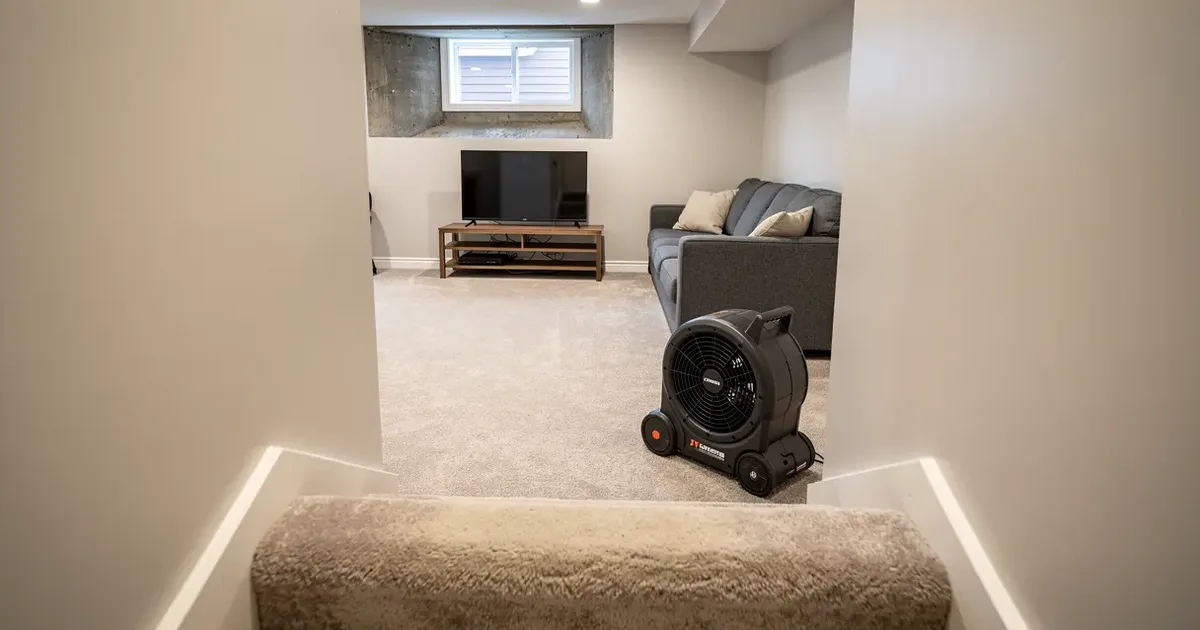
Drying time varies with the fibre, the amount of water needed, the air movement and the conditions in the room. That is why we don't give a fixed time in advance. When necessary, we use professional fans to circulate the air and speed up drying. Before we leave, we tell you what precautions to take and when you can put the furniture back.
At home, leave the basement door open so the air can circulate. The CRI recommends never closing off a room where the carpet is still wet. The details of the drying precautions are in our article on carpet cleaning at home. A fan in the basement can help the air circulate.
For the stairs, the question is mostly about getting around. If the staircase is the only way into a room you will need the same day, plan for it when choosing the time. Before we leave, we tell you how to use the stairs while they dry.
Cleaning or replacing a basement carpet
Replacing the carpet in a basement and on its stairs is a big job. The room has to be emptied, the old carpet and underlay taken out, and everything laid again. When the carpet is still sound but dull or marked by traffic, a cleaning can freshen its look and help it last longer.
When the fibre is worn down to the backing, especially on the nosings, cleaning does not replace it. Our article maintain rather than replace gives pointers to tell the difference at your place.
The photos to take
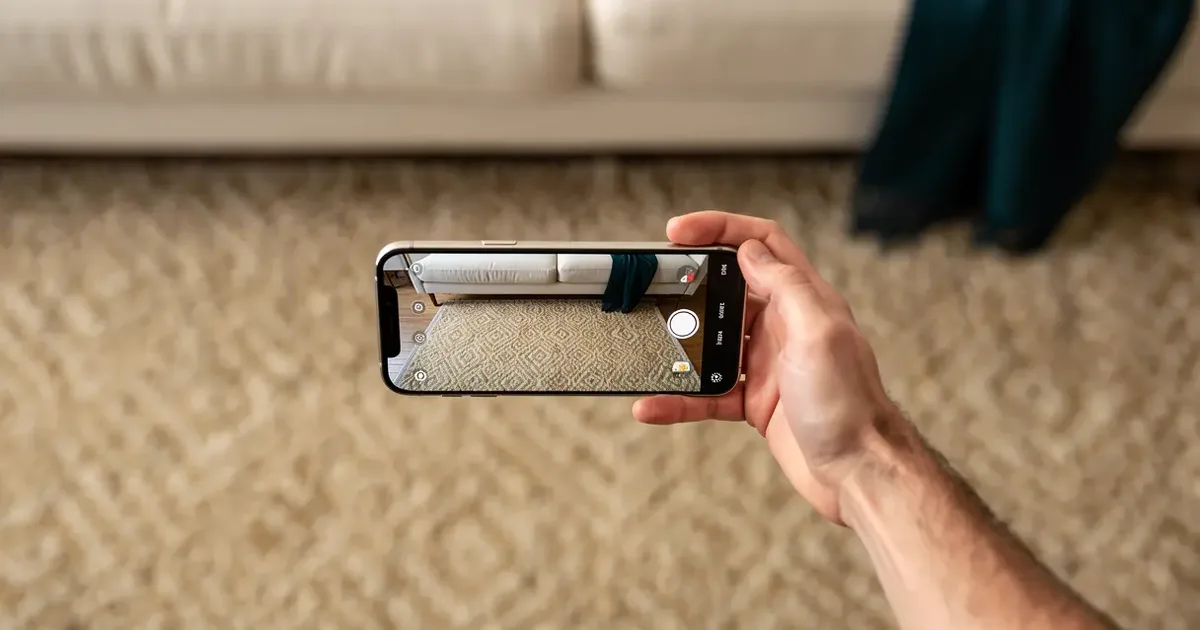
A few photos keep a record of the condition of the carpet. For the basement, take a view of the whole room with the furniture that will stay in place, then close-ups of the marks. For the stairs, photograph the whole staircase from the bottom, then two or three steps up close, including one where the traffic shows. Note the number of steps and the approximate size of the room. Our article on photographing a textile explains how to frame each photo.
The price depends on the surface to clean, the fibre and the condition of the carpet, the treatments needed, services added on request and distance. A minimum also applies to each service.
Frequently asked questions
Are the stairs cleaned at the same time as the basement?
Yes, on request. The number of steps and the condition of the staircase are part of the assessment. The final price can be adjusted after the on-site inspection.
Do I need to empty the basement before you arrive?
No. Remove personal items and small pieces of furniture sitting on the carpet, then clear a path. Heavy furniture can stay where it is and we clean around it when we can, or it can be moved on request. That service is added to the price.
How long does a basement carpet take to dry?
It depends on the fibre, how much water is needed and how well the air moves in the room. A basement often dries more slowly than the floors above. Before we leave, we tell you what precautions to take and when you can put the furniture back.
Does wear on the edge of the steps come out in cleaning?
Not always. Cleaning removes the dirt that darkens the stair nosing. A worn or crushed fibre stays visible, because the fibre itself has changed. We tell you during the inspection, before we start.