A wall-to-wall carpet is cleaned at your place, in the room where it lies. For a home carpet cleaning, Textilo always follows the same five steps: inspection, assessment of the situation, choice of treatment, execution, then evaluation of the results. The service itself is presented on our page Carpet cleaning in Sherbrooke.
What changes from one visit to the next is the method. Two carpets of the same colour can have a different fibre, a different kind of soil and a different history. Here is what we look at, what you can prepare and what may stay.
Before the visit: the photos and the room
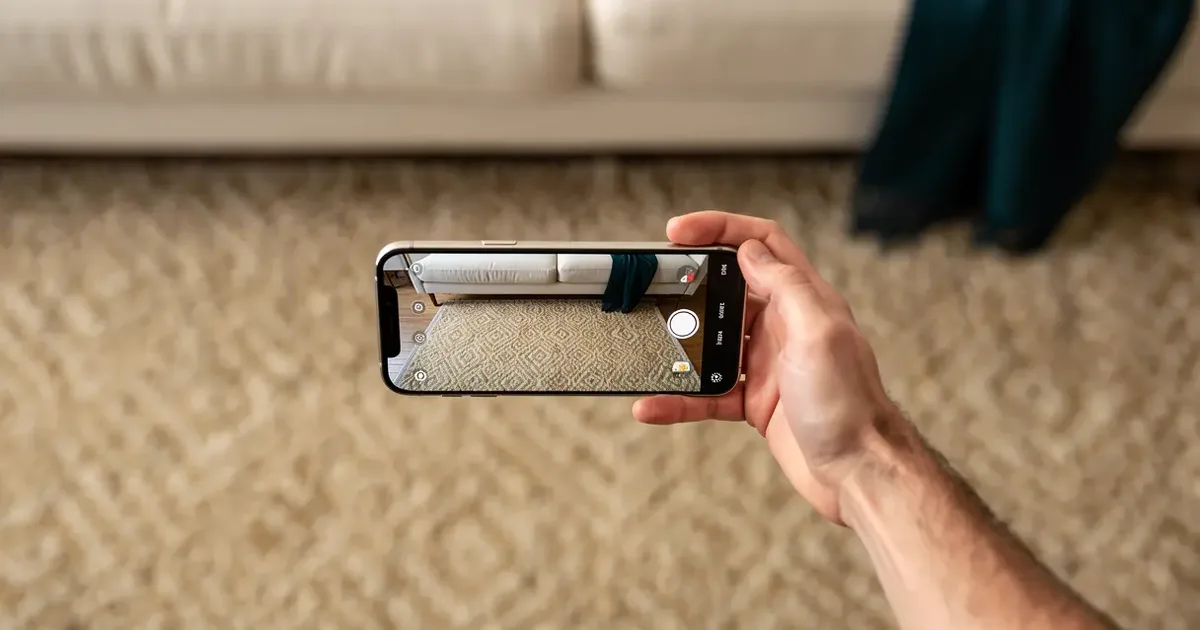
It often starts with a few photos: a view of the whole room, close-ups of the marks and, if you find it, the carpet's label. They show the condition of the carpet before the inspection. Our article on photographing a textile explains how to frame each photo.
On the day of the visit, remove personal items and small pieces of furniture sitting on the carpet, then clear the way to the room. If heavy furniture has to be moved, we can do it on request. This service is not part of the basic service and is added to the price.
The Carpet and Rug Institute (CRI), the American carpet industry association, treats vacuuming before cleaning as an important step. According to its residential care standard, most of the dry, loose soil comes out with a vacuum, and the vacuuming can be done by the resident or by the professional (consulted in October 2026).
The inspection, at the start of the visit
Before we wet the carpet, we inspect it. We look at the fibre and the construction of the carpet, the walkways, the marks, the burns and the worn spots.
Note what you know about the marks: where they came from, how old they are and which products you have already tried on them. A recent coffee mark and an old one rubbed with a stain remover are not treated the same way. By the end of the inspection, you know what may stay, before we begin.
How the method is chosen
The assessment of the situation decides the treatment. The fibre comes first: a synthetic carpet and a wool rug do not tolerate the same amount of water or the same products. The kind of soil matters too: dust, greasy soil in the walkways, body oils at the foot of a sofa, a single mark or an odour.
Depending on what we see, we choose the products and how to apply them. We use them according to their manufacturer's recommendations. The five steps are described in detail on the page our method.
For an odour, the treatment depends on its source. After a pet accident, for example, the odour often comes from the underlay. Our article on pet urine explains why it can come back and what a cleaning can aim at.
During the carpet cleaning
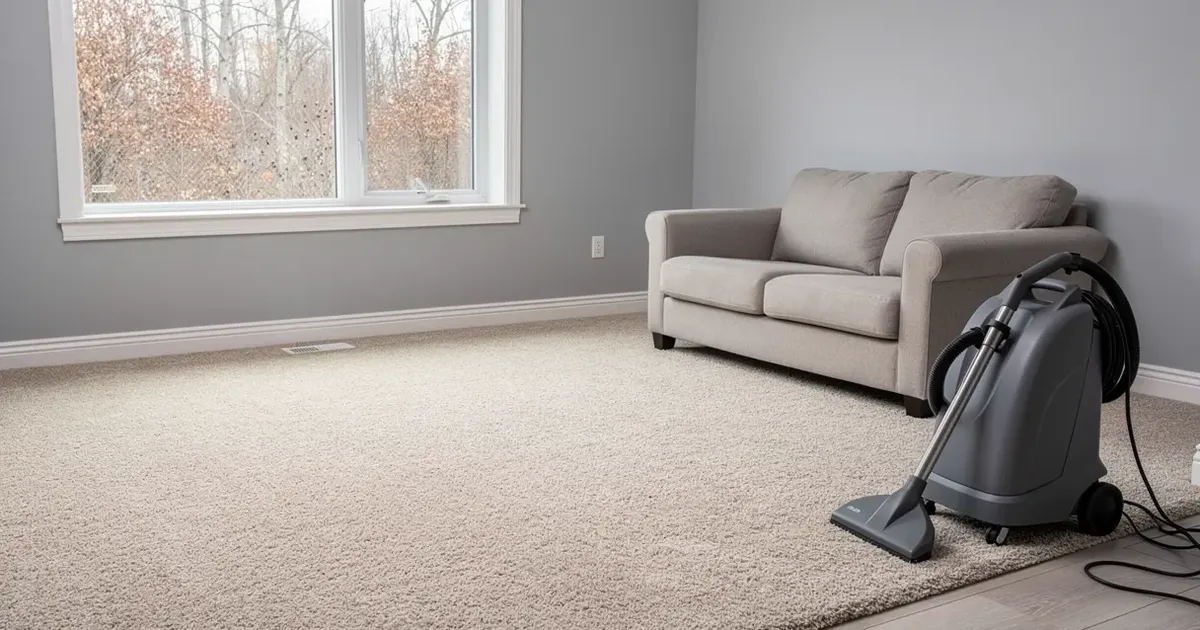
We work with an EDIC Galaxy 2000IX-HR extractor. An extractor sends a cleaning solution into the fibres, then pulls it back out along with the soil it has loosened. We aim to leave as little water in the carpet as possible: the less it holds, the faster it dries.
Marks are treated according to the choice made during the assessment. The last step is the evaluation of the results: we look at the carpet once the work is done and tell you what has changed and what remains.
Stains: what comes out, what fades, what stays
Cleaning often improves the look of a carpet a great deal, and some stains come out completely. Others only fade. Discolouration, a burn or a fibre crushed by foot traffic stays visible after cleaning, because the colour or the fibre itself has changed.
A mark can also reappear as the carpet dries. The IICRC, an organization that publishes cleaning standards, explains in a consumer tip sheet that soil lodged at the base of the fibres or in the carpet backing can wick back up to the surface during drying (consulted in October 2026). If a mark comes back in the days that follow, photograph it to follow how it changes.
Stain protector is available on request, as an add-on to the cleaning.
So before we leave, you know what was treated and what may stay.
Drying, and when to put the furniture back
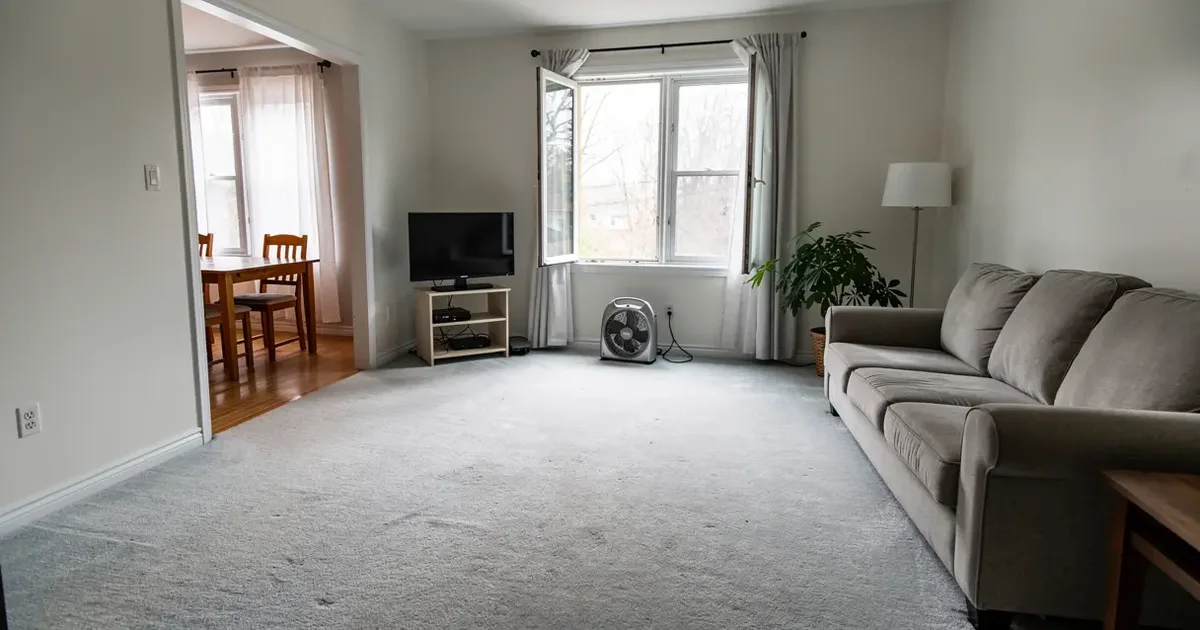
Drying time varies with the fibre, the method, the amount of water needed, the air circulation and the conditions in the room. When necessary, we use professional fans to circulate the air and speed up drying. Before we leave, we tell you what precautions to take.
At your place, ventilate the room with a fan, the heating system's fan or an open window if the outdoor air is dry. The CRI recommends never closing up a room where the carpet is still wet.
Wait until the carpet is dry before putting the furniture back and walking on it. To keep the colour of a furniture leg from passing into the fibres, the CRI standard advises putting a barrier, such as a plastic or aluminum tab, under the legs of furniture that touches a carpet that is still damp.
To find out how often to have your carpet cleaned, read our article on cleaning frequency.
What changes the price
The price depends on several things:
- the surface area and the number of rooms;
- the fibre and the condition of the carpet;
- the treatments needed, for example for a mark or an odour;
- services added on request, such as moving furniture or stain protector;
- distance: we work in Sherbrooke and within about 50 km, and travel outside Sherbrooke may involve extra fees.
A minimum applies to each service.
Frequently asked questions
Do all stains come out in cleaning?
Not always. Cleaning often improves the look of a carpet a great deal, and some stains come out completely. Others only fade, and discolouration or a burn stays visible. Before we start, we tell you what may stay.
Do I need to empty the room before you arrive?
Remove personal items and small pieces of furniture sitting on the carpet, then clear the way in. Heavy furniture can be moved on request. This service is not part of the basic service and is added to the price.
When can I put the furniture back on the carpet?
Once the carpet is dry. Before we leave, we tell you what precautions to take. If a piece of furniture has to touch a carpet that is still damp, the Carpet and Rug Institute advises putting a barrier under its legs.
Do I need to vacuum before the cleaning?
The Carpet and Rug Institute treats vacuuming before cleaning as an important step, done either by the resident or by the professional.