Two area rugs of the same size, lying in the same room, are not always cleaned the same way. What decides the method is first how the rug is made: woven, tufted or long pile. The fibre, the fringes and the condition of the rug count too.
Our page on rug cleaning presents the service itself. This article explains what we look at before cleaning an area rug, why each point changes the method, and what may remain afterwards.
Turn the rug over: woven or tufted?
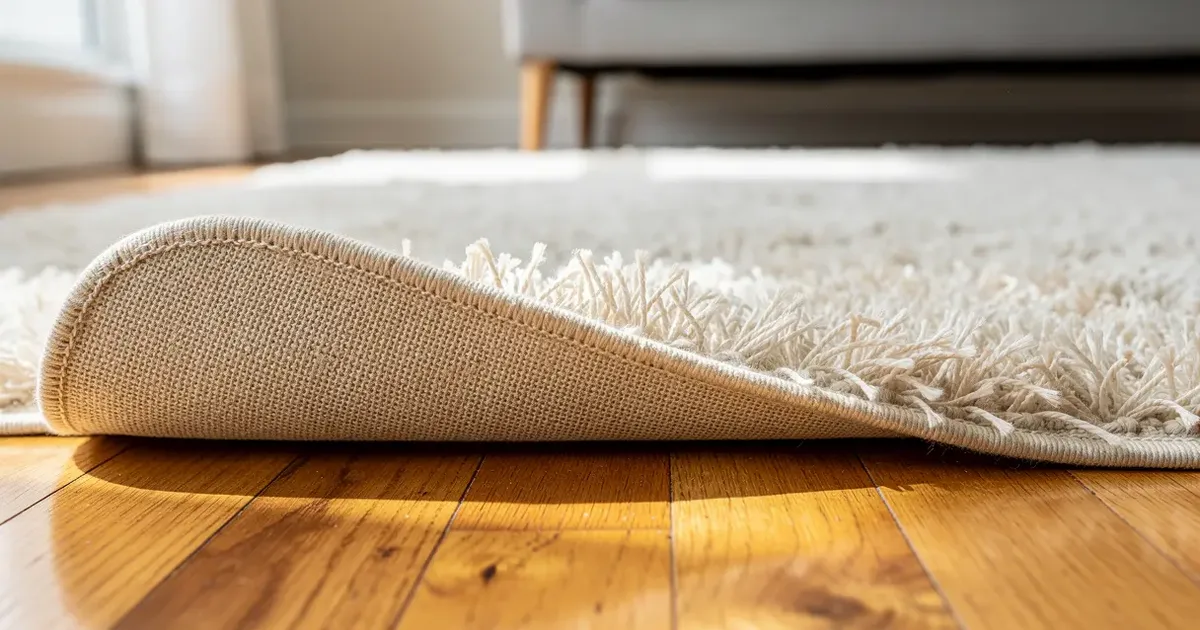
The first thing to look at is underneath the rug. Turn up a corner and look at the back.
On a woven rug, the threads on top and those at the base are interlaced, and the pattern shows on the back almost as it does on top. On a tufted rug, the fibres are punched into a backing cloth, then held in place by a layer of latex glue. A second cloth, often plain, is glued over it to hide everything. A plain cloth back points to a tufted rug, and the same pattern on both sides points to a woven one.
On a tufted rug, the glue is what needs attention. In its tip sheet on area rugs, the IICRC, a standards body recognized in professional cleaning, explains that the latex in tufted rugs dries out and breaks down over the years (consulted in October 2026). So we check the condition of the back before choosing how much water to use and which product.
On a woven rug, the questions are mostly about the fibre and the shape. The risks of an over-wet rug are described in our article on renting a machine or hiring a professional.
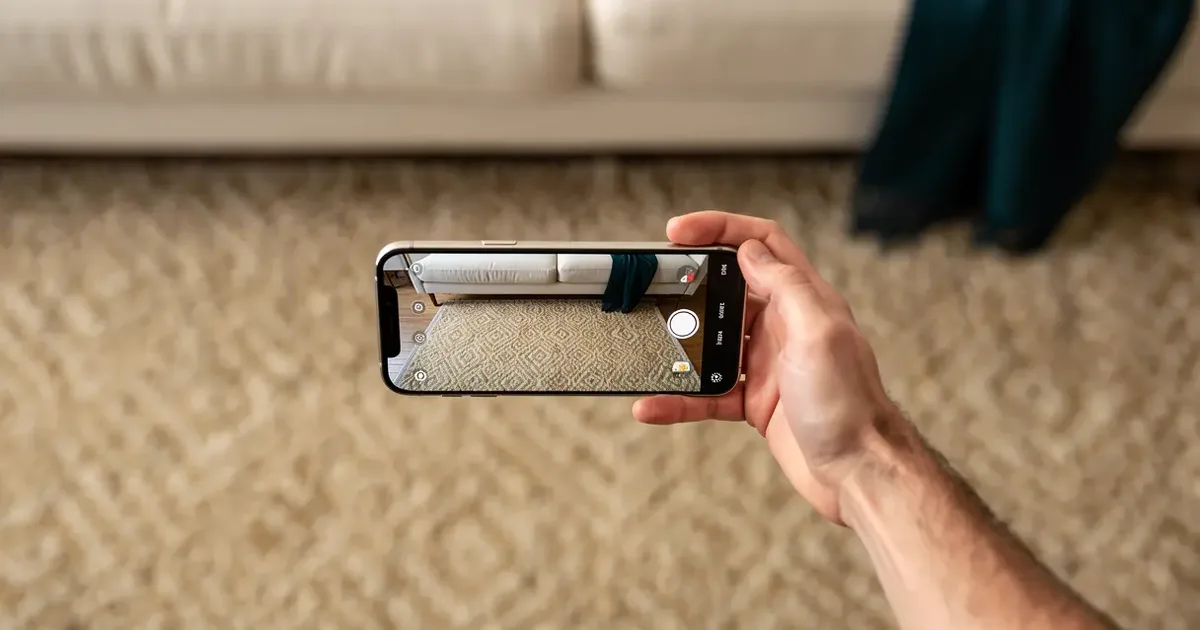
A photo of the back shows which methods are possible before any visit.
Long pile: more fibre, more water to dry
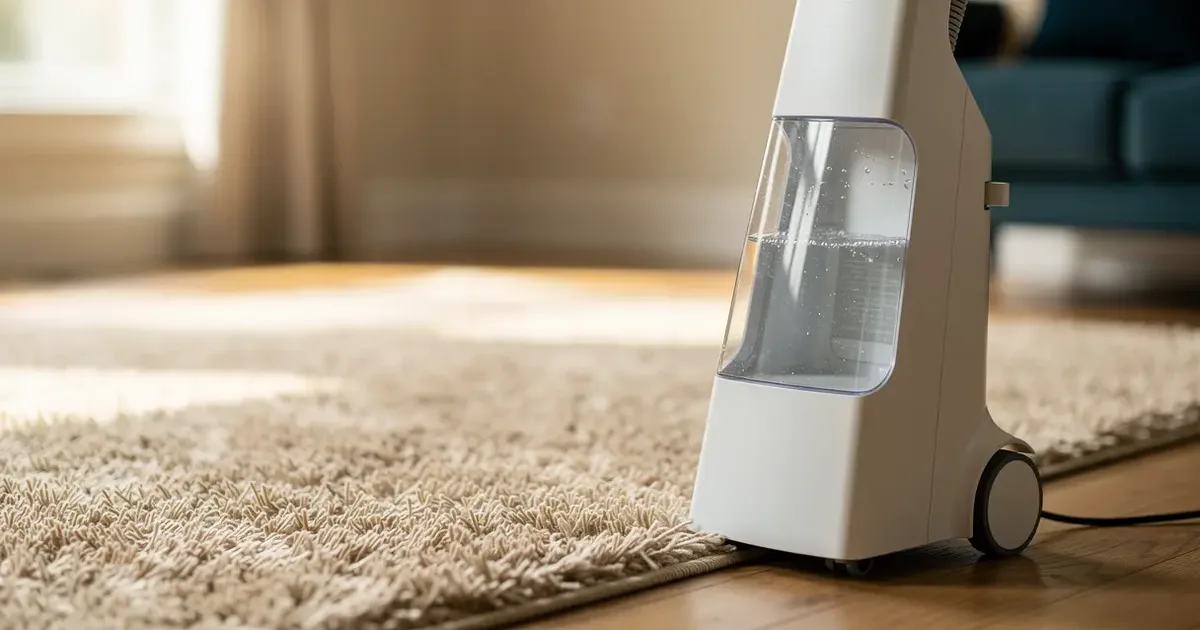
A long pile rug, often called a shag, holds dust and sand deeper in its fibres. It also holds more liquid during cleaning. The amount of moisture is one of the factors that change drying time.
Before we start, we look at the length and density of the pile, and at how it is anchored at the base. A tufted long pile rug has two points of attention: a lot of fibre to rinse and a glue to protect. We then adjust the amount of water and plan for drying from the start.
A rug must be completely dry before it goes back into use. When needed, we use professional fans to speed up drying. Some of the pile stands back up as it dries. A fibre that has been crushed for years under a piece of furniture or in a hallway may stay marked, though.
We tell you when the rug can go back into use.
Natural or synthetic fibre
The construction tells you how the rug holds together. The fibre tells you how it reacts to water and products.
- Synthetic fibres, such as polypropylene, nylon or polyester, are common in store-bought rugs. They often leave more choice in the method, but a tufted synthetic rug keeps the limits of its glue.
- Wool needs a suitable product and a measured amount of water.
- Jute, sisal and other plant fibres react badly to too much water. According to the IICRC tip sheet on carpet topics (consulted in October 2026), a plant fibre such as jute can yellow or brown when it gets wet and dries slowly.
- Blends, for example wool and synthetic, are treated according to the most fragile fibre.
For a plant fibre rug, the amount of water matters a great deal. Before we begin, we tell you whether a cleaning makes sense, and with what precautions.
If a label is sewn under the rug, photograph it: the fibre content is often listed there.
Fringes and borders
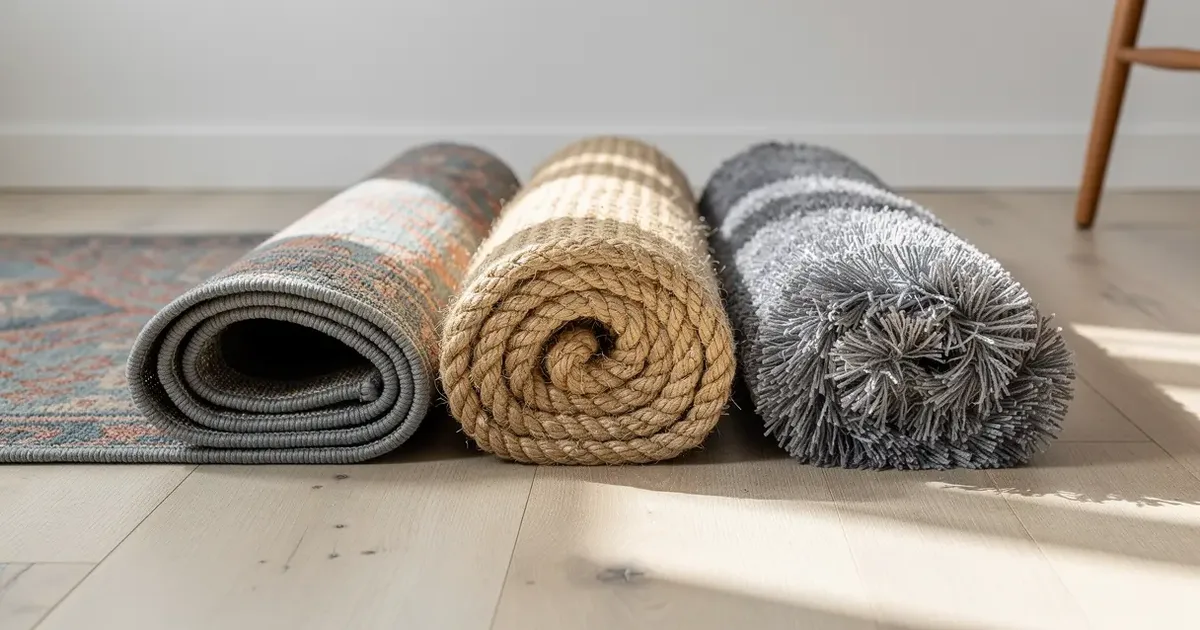
Fringes are often the most worn part of a rug. In the same tip sheet, the IICRC notes that they are easily damaged by foot traffic, pets, a vacuum run too hard or bleach.
The IICRC also suggests a simple test: check whether the fringes come loose easily. If they do, any cleaning at all risks damaging them further. We do this check before we start, then tell you what we can do for the fringes and what will stay as it is.
Borders deserve a look too. A border coming unstitched or a corner that curls up is easier to spot before the cleaning than after.
Hand-woven, oriental, antique or silk rugs
These rugs raise their own questions: dyes that can be sensitive to water, fragile fibres, old repairs, a piece that is hard to replace. For them, we promise nothing from a description alone.
We look at the top, the back and the fringes first. After that examination and, if needed, an on-site inspection, we tell you whether we can take your rug on. If we cannot, we tell you that too, before any work.
What may remain after cleaning
A cleaning often improves the look of a rug, and some marks come out completely. Other things may remain, and we would rather say so before we begin:
- wear in the walkways, where the fibres are crushed or thinned;
- old marks, or marks already rubbed with a home remedy, that fade without coming out;
- a dye that has already run, or browning already present on a plant fibre;
- worn or broken fringes;
- a rug that ripples or a corner that curls, when the base is out of shape.
To find out whether a worn rug is still worth cleaning, read our article Maintain rather than replace your textiles.
Before the visit
To keep a record of a rug's condition, take:
- an overall view of the top;
- a photo of the back, at a turned-up corner;
- a close-up of the fringes;
- a close-up of the marks or worn areas;
- the label, if there is one;
- the approximate size, for example 5 feet by 8.
Note also what has already been tried on the marks. Our article on photographing a textile explains how to frame each photo.
Frequently asked questions
How can I tell if my rug is woven or tufted?
Turn up a corner and look at the back. If the pattern shows there almost as it does on top, the rug is probably woven. If the back is covered with a plain cloth glued on, it is probably tufted. A photo of the back helps us confirm it.
Does a long pile rug dry more slowly?
Often, yes, because its fibres hold more liquid. Drying time also depends on the fibre, the method and how well air moves through the room. We tell you when the rug can go back in place.
Why is the back of my rug breaking down?
On a tufted rug, it is often the latex glue that dries out and breaks down over the years, as the IICRC explains. We check it before choosing the method, and we tell you whether a cleaning makes sense.
Do you clean oriental or hand-woven rugs?
We promise nothing before we have seen the rug. We examine the top, the back and the fringes. After that examination and, if needed, an on-site inspection, we tell you whether we can take it on.