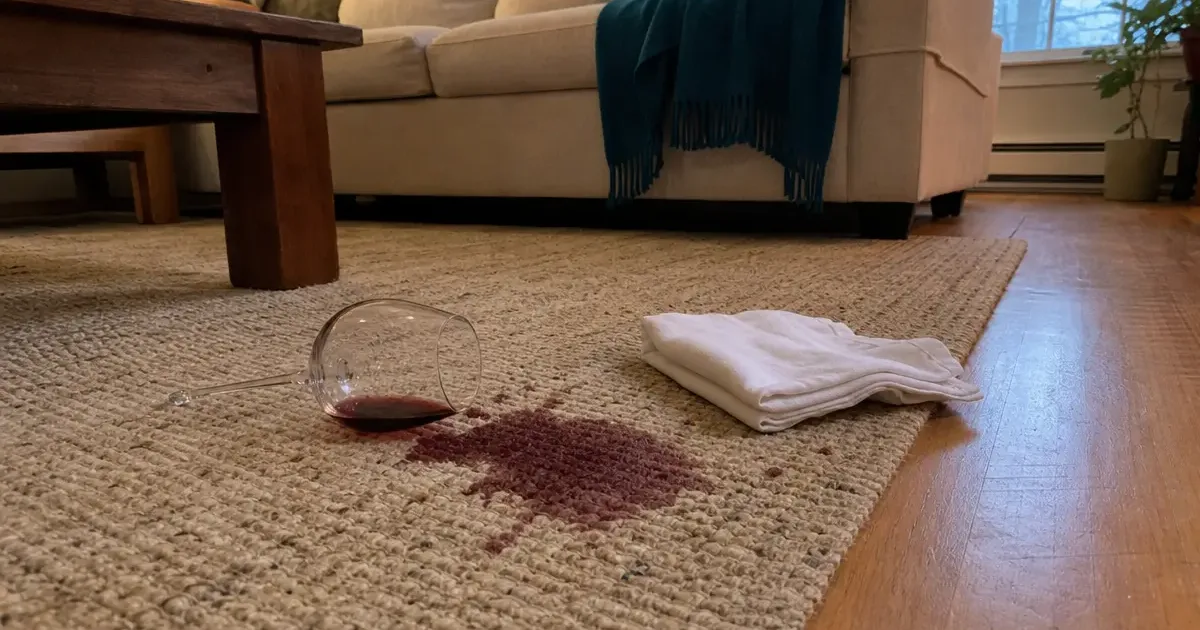
When wine, coffee or tea lands on a carpet, an area rug or a sofa, blot it right away with a dry white cloth, pressing without rubbing. Then avoid hot water and use only a small amount of product. The longer you wait, the more likely the stain is to become permanent.
The first minutes: blot, without rubbing
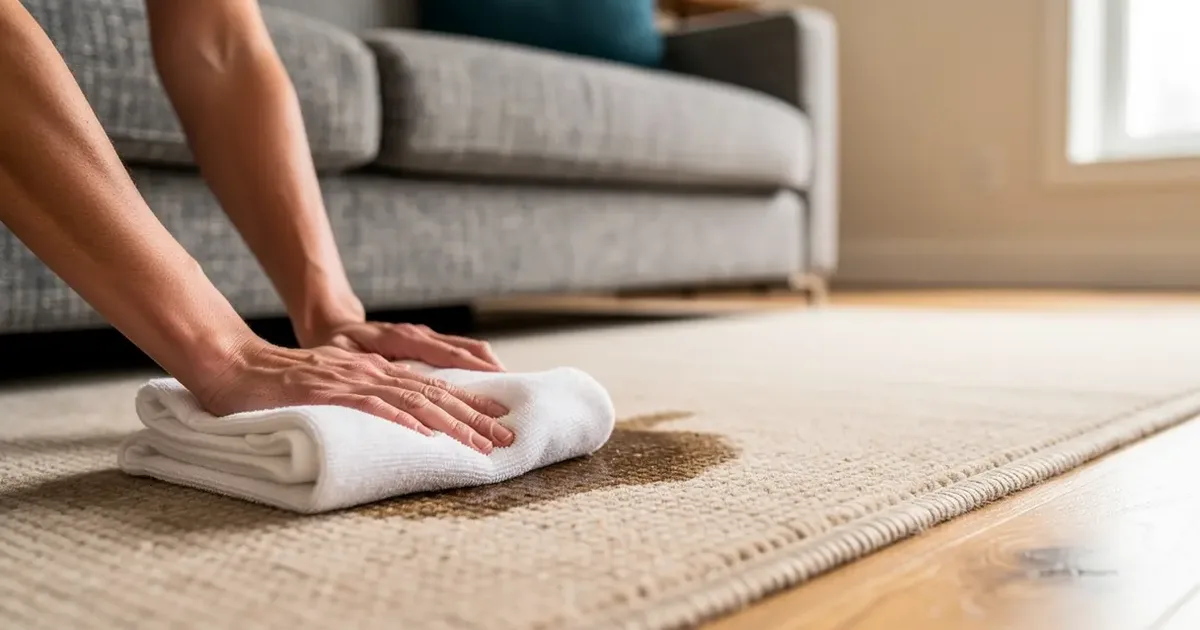
Start by blotting up the liquid with a dry white cloth or white paper towels, pressing down. The Carpet and Rug Institute (CRI), an American carpet industry organization, recommends acting quickly: waiting can make a stain permanent.
Here are the steps the CRI gives for wine.
- Absorb as much liquid as you can, switching to a dry cloth as soon as one is wet.
- Test your solution in a hidden spot, under a cushion or at the edge of a rug.
- Pour a little solution onto a white cloth, then work the stain gently, from the edge toward the centre, without rubbing.
- Repeat as long as the stain keeps transferring to the cloth.
- Once the stain is gone, rinse with cold water, then blot until the area feels dry to the touch.
For the solution, the CRI suggests about 1 ml (1/4 teaspoon) of liquid dish soap in 250 ml (1 cup) of lukewarm water. Do not add more: the CRI advises against any stronger concentration.
For wine on carpet, the University of Georgia Extension recommends sponging right away with cool water, to dilute the wine and keep it from spreading. For coffee and tea on carpet, it suggests a mild detergent in lukewarm water, then rinsing with water and blotting.
What can make a wine or coffee stain set
Four things can set a stain or spread it: rubbing, heat, mixing products and soaking the textile. Each one has its reason, from a named source.
Rubbing
The CRI asks you to work the stain gently, without rubbing, from the edge toward the centre. The University of Georgia also talks about sponging, so the stain does not spread. Press, lift the cloth, then repeat with a clean section.
Heat
According to the Texas A&M AgriLife Extension guide on washable fabrics, heat sets stains. That guide covers clothing and household linens. For carpets and furniture, the CRI and the University of Georgia use cool or lukewarm water, never hot.
So never use hot water, and do not heat the spot with a hair dryer or an iron.
Mixing products
Use one product at a time. The same Texas A&M guide advises against mixing stain removal products, and notes that alkalis such as ammonia can set coffee and tea stains.
Mixing also carries a risk for you. Health Canada says never to mix bleach with another product, especially one that contains ammonia or an acid such as vinegar, because the mix can release toxic gases. Air out the room during and after using a product.
The CRI points out another trap: some spot-removal kits include a stain-resist solution. Applied before the stain is fully gone, it can make the mark permanent.
Soaking the textile
Use as little water as you can. The CRI suggests rinsing with a mist sprayer, to avoid overwetting, and blotting after each rinse. It adds that many spot removers leave a residue that attracts soil, which is why rinsing a few times helps.
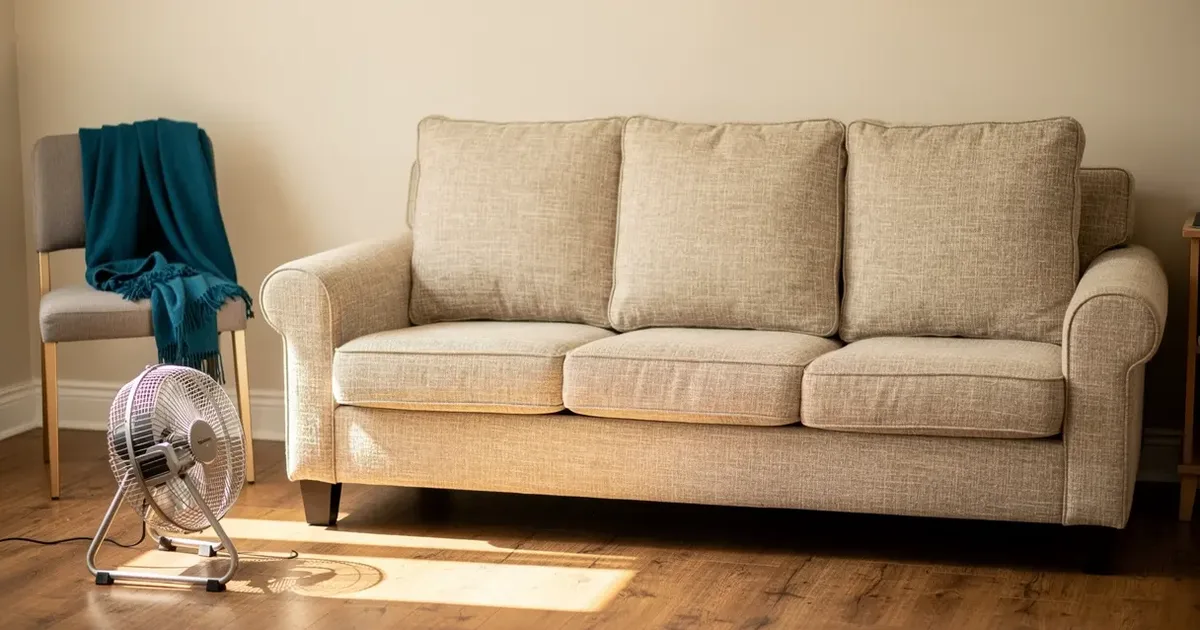
On a sofa, the University of Georgia recommends letting the fabric dry as quickly as possible.
Carpet, area rug or sofa: check before you act
On wall-to-wall carpet, the steps above apply. On a sofa or a natural-fibre rug, check the label or the fibre first, because water does not suit every textile.
Sofa: the cleaning code
Look for the label under a seat cushion or under the furniture. According to the manufacturer Ashley Furniture, the letters read as follows.
| Code | What the manufacturer recommends |
|---|---|
| W | Water-based cleaners, without overwetting the fabric |
| S | Dry-cleaning solvent only, no water |
| WS | Either one, without saturating the fabric |
| X | Vacuuming or light brushing only |
With an S or X code, blot dry and do not add water. Our article on sofa cleaning at home explains these codes in more detail.
Natural-fibre area rug
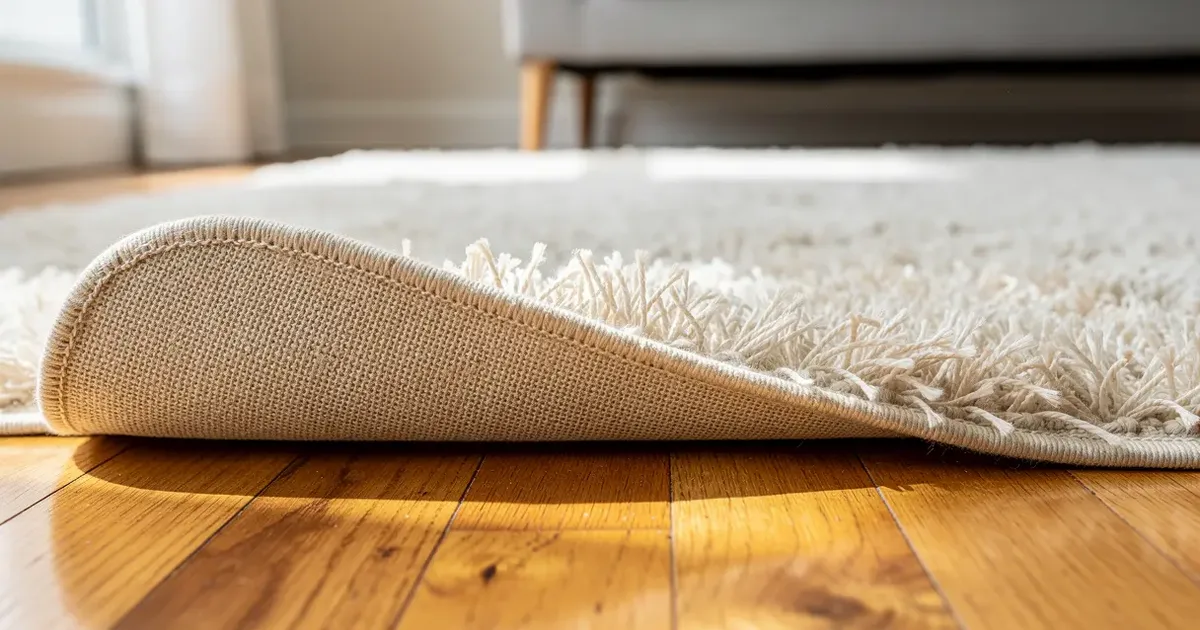
A plant fibre such as jute can yellow or brown when it gets wet and dries slowly, according to an IICRC tip sheet. On a jute rug, blot dry and use as little water as you can. Our article on area rug cleaning by type goes through each fibre.
If the stain comes from a pet rather than a glass, the steps change. Read our article on pet urine on a carpet, mattress or sofa instead.
What a professional cleaning can do, and its limits
A professional cleaning can take on a stain that home steps did not remove, but an old stain may only fade. The result depends on the fibre, the age of the mark and the products already tried.
Once we open in January 2027, every job will follow the same method: inspection, assessment of the situation, choice of treatment, execution, then a review of the results with you. The treatment will be adapted to the fibre, the cleaning code and what you have already applied.
Some stains come out completely, others only fade. If a mark is likely to remain, we will say so before we start.
Carpet cleaning, area rug cleaning and upholstered furniture cleaning each have their own page. We will work in your home, in Sherbrooke and within about 50 km of the city.
The sources cited in this article were consulted in November 2026.
Frequently asked questions
Should I use cold or warm water on a wine stain?
Never hot. For wine, the Carpet and Rug Institute and the University of Georgia use cold or cool water to blot and rinse, and lukewarm water for the dish soap solution. Texas A&M AgriLife Extension notes that heat sets stains.
Can a dried wine stain still come out?
Sometimes. Some stains come out completely, others only fade, depending on the fibre, the age of the mark and the products already tried. We will say so after the inspection, before we start.
What if the sofa label says S or X?
Do not add water. According to the manufacturer Ashley Furniture, code S calls for dry-cleaning solvent only, and code X for vacuuming or light brushing only. Blot dry with a white cloth, then keep a photo of the label.
An honest opinion before we act
We will give you an honest opinion before we act. If a stain stays despite your efforts, keep a few photos of the area and the label, and note the products you tried: these details will help us assess the situation once we open in January 2027.