A home sofa cleaning is done at your place, in the room where the furniture is. At Textilo, it starts with an assessment of the fabric, continues with a treatment suited to that fabric and ends with an evaluation of the results. Sofa, couch or chesterfield: the process is the same, in Sherbrooke and within about 50 km.
The on-site assessment, before the first step
Before touching the fabric, we inspect the sofa, assess the situation and choose the treatment. These are the first three of the five steps of our method: inspection, assessment of the situation, choice of treatment, execution, then evaluation of the results.
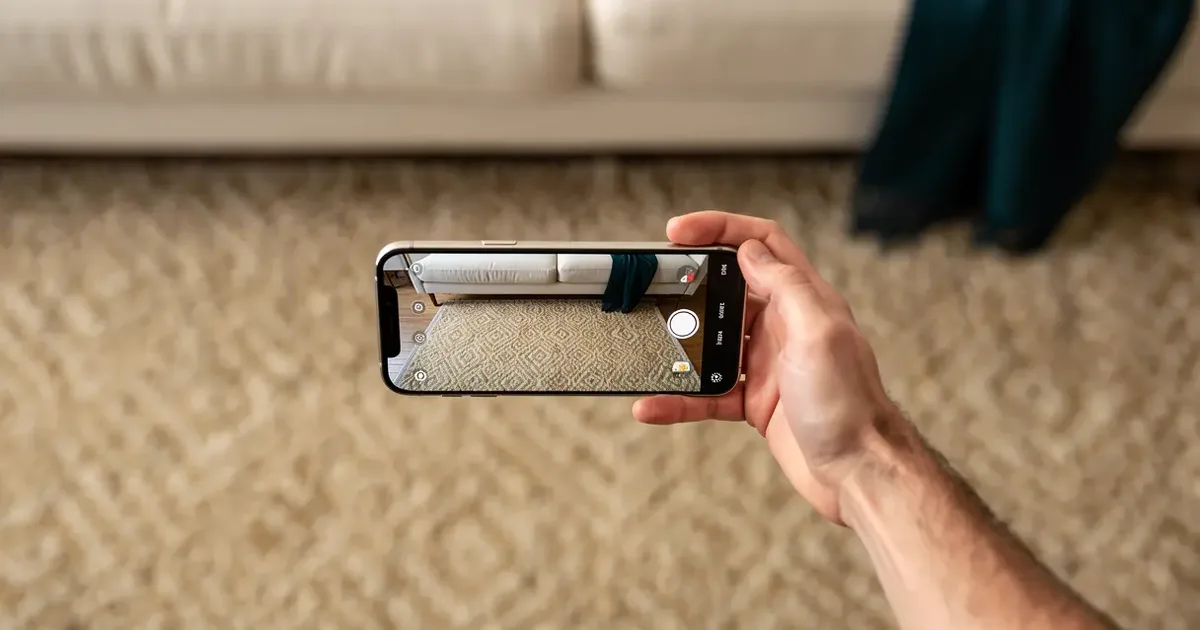
It often starts with a few photos. A few photos show the condition of the furniture before cleaning. Our article on photographing a textile explains how to frame each photo.
If you find the care label, photograph it too: manufacturers like Ashley Furniture print a cleaning code on it.
Reading your sofa's care label
Look for the care label under a seat cushion or under the furniture. Several North American furniture makers print a one- or two-letter code on it that sums up the cleaning method recommended for the fabric. According to the help page consulted in October 2026, the American maker Ashley Furniture gives these letters the following meaning.
| Code | What the manufacturer recommends |
|---|---|
| W | Water-based cleaners. Ashley says not to over-wet the fabric. |
| S | Solvent-based cleaners or dry cleaning only, no water. |
| WS (sometimes SW) | Either one. Ashley says not to saturate the fabric. |
| X | Vacuuming or light brushing only, with no cleaning agent. |
Another point from Ashley: cushion covers should not be removed to be washed or dry cleaned.
The code says how to clean the fabric. It says nothing about the wear of the furniture or the products already tried on it. That is why, before every cleaning, we assess the textile and choose the appropriate method. If the label is missing or illegible, the on-site assessment counts all the more.
Preparing the room before we arrive
Remove personal items on and around the sofa, then clear access to the furniture. Think of throws, remote controls, toys and fragile items on the side table, as well as the path to the room.
If a piece of furniture has to be moved, we can do it on request. This service is not part of the basic service and is added to the price.
If you know what caused a mark, such as coffee, wine or a pet accident, note it down, along with any product already tried on it. This information helps choose the treatment.
For a spill, blot it with a clean, dry cloth, without rubbing.
What happens during a home sofa cleaning
We choose a method suited to the textile, its condition and its construction. A microfibre sofa and a velvet armchair are not treated the same way. We use products according to their manufacturer's recommendations.
Execution, the fourth step of our method, follows the plan set during the assessment, and we work with an EDIC Galaxy 2000IX-HR extractor.
For odours, the treatment depends on their source. Some odours need extra treatment, others cannot be completely eliminated, and we explain that to you honestly.
The last step is the evaluation of the results. Stain protector is available on request, as an add-on to the cleaning.
Our page on upholstered furniture cleaning presents the service in detail, from sofas to upholstered chairs.
Drying and care after the cleaning
Drying time varies with the textile, the method used, the amount of moisture the cleaning needs, ventilation and ambient conditions.
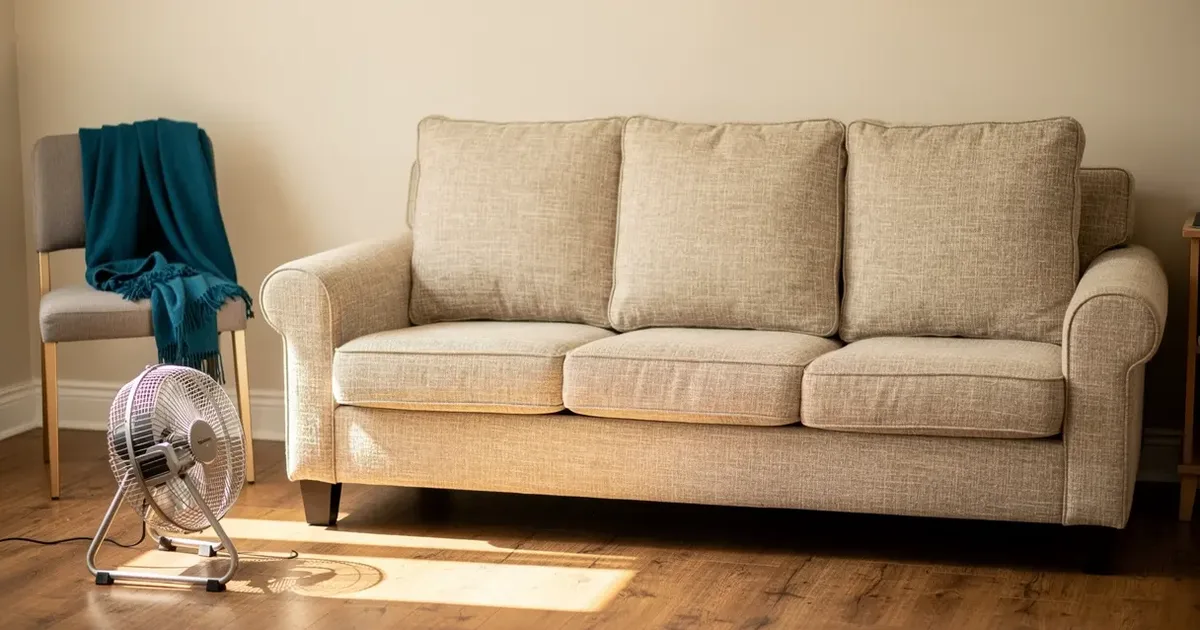
When necessary, we use professional fans to circulate the air and speed up drying. Before we leave, we tell you what precautions to take and when the sofa can be used again, after it has dried completely. The sofa must dry completely.
The amount of water matters from the start too. Ashley Furniture asks not to over-wet a code W fabric and not to saturate a code WS fabric: the less water a fabric receives, the less there is left to dry.
In your home, let air circulate in the room, with a window open if the outdoor air is dry or with a fan. Avoid sitting on the sofa and putting cushions and throws back on it until it is completely dry.
To find out how often to have your sofa cleaned, read our article on cleaning frequency.
What changes the price
The price depends on the textile, the size of the furniture, its condition, the treatments, added services and distance:
- the type of textile;
- the dimensions of the furniture, for example the number of seats;
- its condition;
- the treatments needed, for example for a mark or an odour;
- services added on request, such as moving furniture or stain protector;
- distance: we work at your home, in Sherbrooke and within about 50 km, and travel outside Sherbrooke may involve extra fees.
Frequently asked questions
Is the on-site assessment free?
Yes. From our opening in January 2027, we will offer a free on-site estimate when the situation calls for a more precise assessment. The final price can be adjusted after the on-site inspection, based on the textile, its condition and the treatments needed.
How long does the sofa take to dry?
It depends mostly on the textile, the method and how well the room is ventilated. Before we leave, we tell you when you can use the sofa again. The drying section above explains how to speed it up.
Do all stains come out in cleaning?
Not always. Cleaning often improves the look of a sofa a great deal, and some marks come out completely. Other marks or discolourations can be permanent. If that is the case for your furniture, we explain it honestly.
Can you move the furniture around the sofa?
Yes, on request, as noted above in the section on preparing the room. Otherwise, just remove personal items and clear access to the sofa.
What do the letters W, S, WS and X on a sofa's care label mean?
They indicate the cleaning method the manufacturer recommends for the fabric. According to the maker Ashley Furniture, W means water-based cleaners, S means solvent-based cleaners or dry cleaning only, WS either one, and X vacuuming or light brushing only.