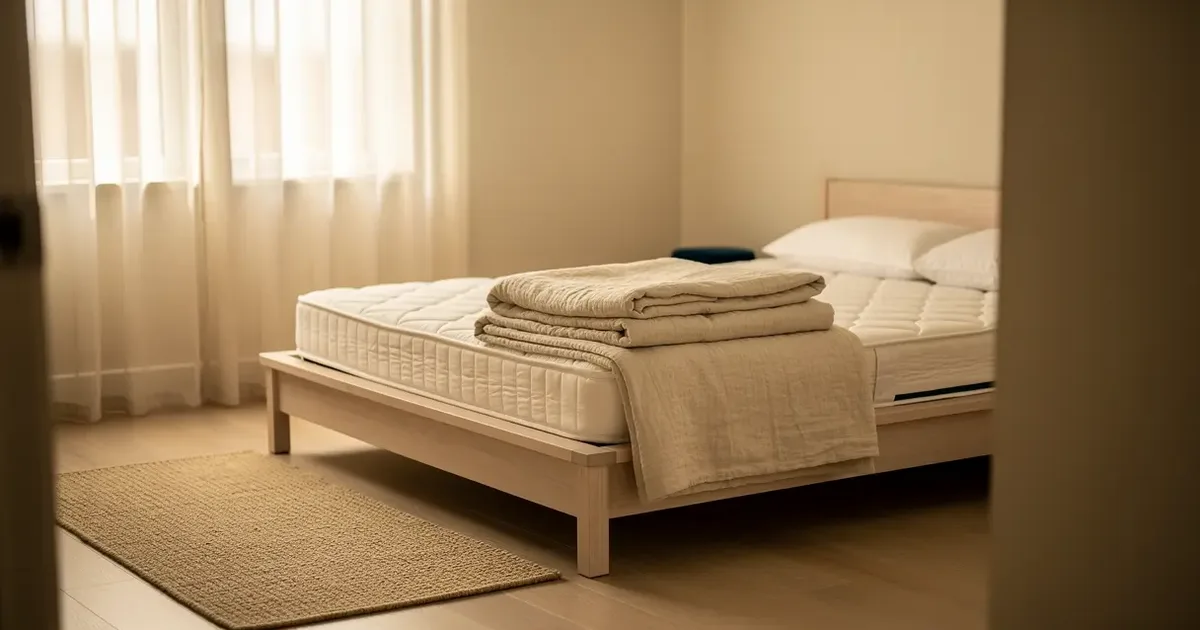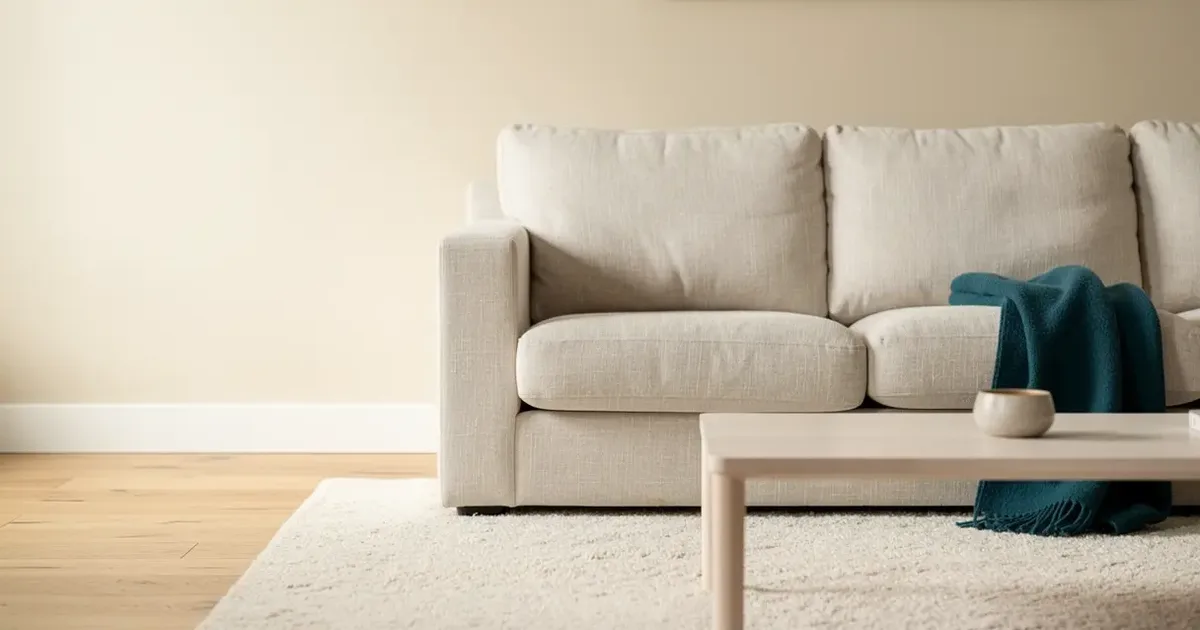
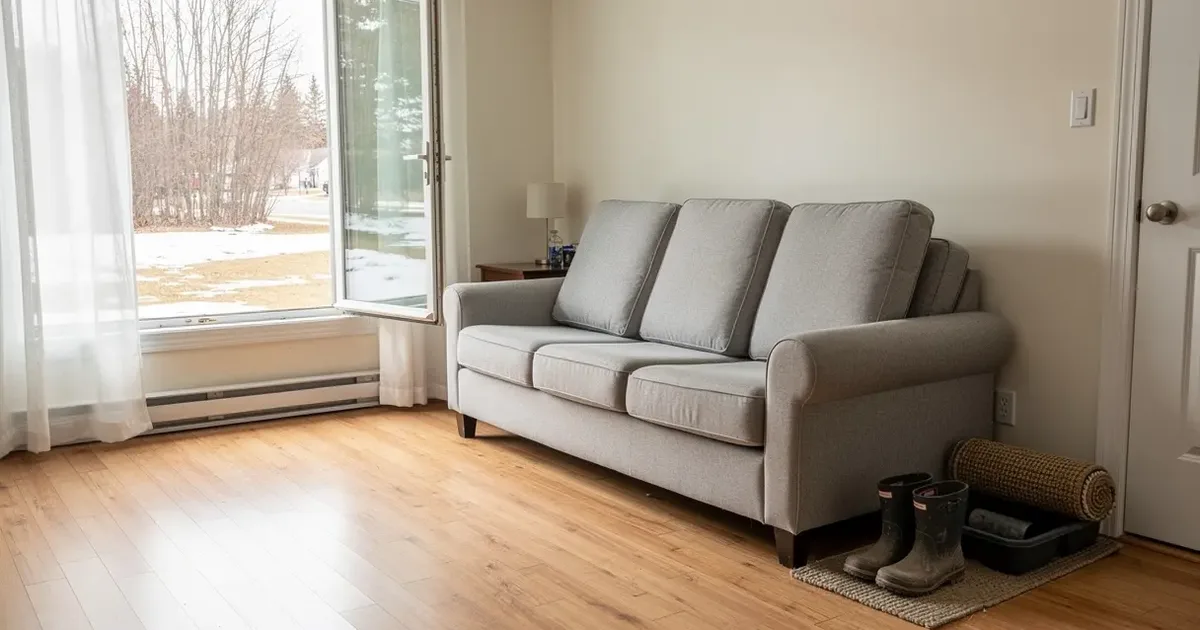
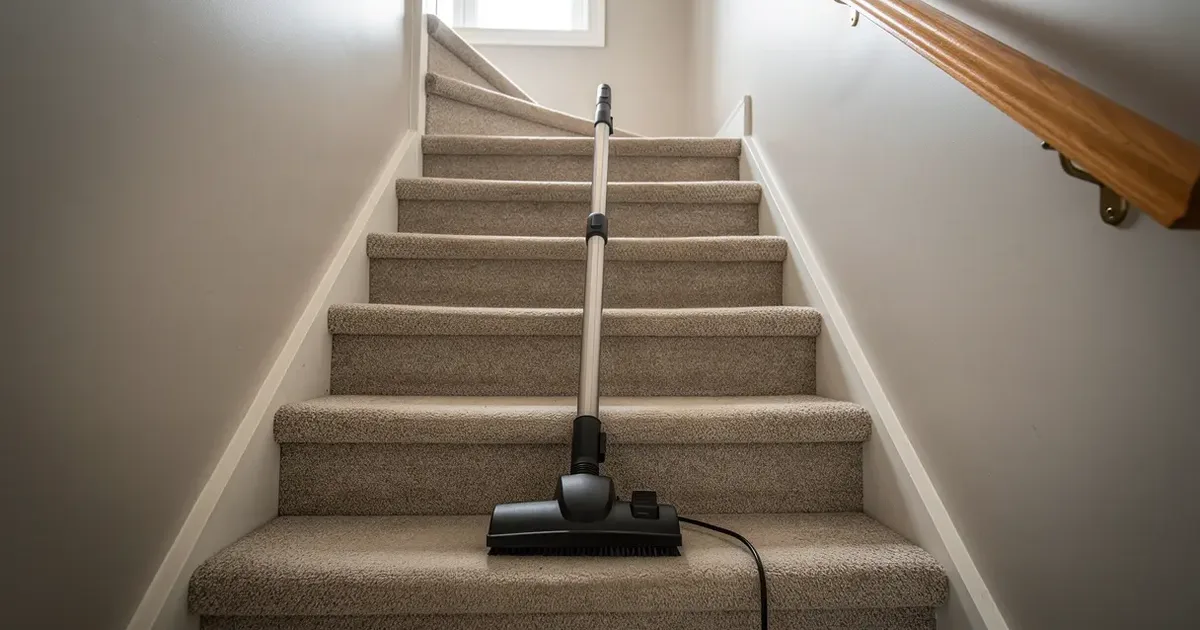
In spring, cleaning often starts with the windows, the cupboards and the floors. The textiles come later, if there is time left. After a winter spent with the windows shut, though, they are the things that got the most use: the sofa on January evenings, the mat by the front door, the carpet on the stairs.
A simple order of work keeps you from cleaning the same spot twice. For a full cleaning, our pages on carpet and rug cleaning, upholstered furniture cleaning and mattress cleaning present each service.
What winter leaves in textiles
All winter, boots carry sand, salt and calcium to the front entrance and the bottom of the stairs. Sofa armrests and headrests pick up skin oils over long evenings in the living room. The windows stay shut for months, and dust settles on everything that does not move.
This is ordinary dirt. It dulls the fibres little by little, and the vacuum does not always lift all of it. For the white marks by the door, our article on road salt and calcium on carpet explains what to do before a cleaning.
The forgotten textiles, room by room
Some textiles get forgotten because they are out of sight, others because they are used so little. Walk through the house with this list in hand.
- The entry mat and the indoor doormat. They took every boot of the winter, and the dirt works its way down to the base.
- The stair carpet. The front edge of each step gets dirty first, and the vacuum rarely reaches it.
- Under the sofa cushions and behind the sofa. Take off the seat cushions: crumbs, dust and small objects collect at the bottom. The back of the furniture, on the wall side, collects dust too.
- The upholstered dining chairs. They see the whole family's meals, from breakfast to supper.
- The basement or guest room armchair. It is used little, but it collects dust like the others.
- The sides of the mattress and an upholstered headboard. Sheets protect the top of the mattress, rarely its sides.
To know whether one of these textiles needs a cleaning, our article on cleaning frequency describes the signs to watch for and the published guidelines. Once you have finished your walk-through, you know which textiles to look at more closely.
What order to work in
Start with what is high up and finish at the floor: the dust that falls from shelves and furniture then gets picked up in a single pass.
- Clear the furniture. Take off throws, decorative cushions and anything resting on the furniture. Wash the throws according to their label. For cushion covers, check the label before removing them: Ashley Furniture recommends not removing cushion covers to wash or dry clean them when the label shows code W, S, SW or WS (page consulted in October 2026).
- Dust the high places. Shelves, picture frames and tops of furniture: what falls from them lands on the textiles below.
- Vacuum the upholstered furniture and the mattress. With the vacuum's brush attachment, go over the seat, the bottom under the cushions, the armrests, the seams and the sides of the mattress.
- Finish with the rugs, carpets and stairs. What fell from the furniture gets picked up at the same time. Go slowly, in several directions.
Vacuum before any wet cleaning, at home or professional. In its residential carpet maintenance standard (CRI 205), the Carpet and Rug Institute, the American carpet industry association, says that vacuuming before a deep cleaning changes the result (standard consulted in October 2026). Dry dirt comes out dry, before water can push it down into the fibre.
Open windows, depending on the day
In spring, the first mild day makes you want to open everything and wash everything at once. For drying a textile, the weather decides. The same CRI 205 standard advises opening the windows if outdoor conditions allow it: sunny weather, low humidity and low dew point. It also recommends keeping the air moving, with the heating or air conditioning system's fan or with fans in the room.
In March and April, a rainy or snowmelt day is therefore not the day to count on the window. Keep the textiles that need to dry for a dry, sunny day, and save the other tasks for grey days.
After a cleaning by Textilo, drying time depends on the textile, the method, the amount of moisture used and the airflow in the room. When necessary, we use professional fans to speed up drying. Before we leave, we tell you what precautions to take and when you can use the textile again.
What housework does, and what calls for a visit
Vacuuming and airing out the room remove loose dust and freshen a room. They do not always reach dirt lodged at the base of the fibres, old marks or odours that come from the padding.
Before a cleaning, we look at the label, the fibre and the kind of soil: dust, body oils, salt marks, stains or odours. That decides the method and how much water we use. We also tell you what may stay. Some marks come out completely; others only fade. Odours are treated according to their source, and some do not go away completely.
A textile that has only lost its lustre can often be cleaned instead of replaced. Our article on maintaining rather than replacing explains how to tell the difference. That way, before you have anything cleaned, you know what you can hope for from a cleaning.
Frequently asked questions
Where do I start spring cleaning the textiles?
Clear the furniture and dust the high places, then vacuum, before any product or wet cleaning. Work from the top down: upholstered furniture and the mattress first, rugs and carpets last. What falls off the furniture then gets picked up along with the rest.
Should I open the windows to dry a carpet?
Only if the outdoor air is right for it. The Carpet and Rug Institute advises opening the windows on sunny days, when humidity and dew point are low (standard consulted in October 2026). On other days, use a fan to keep the air moving instead.
Does spring cleaning get rid of every odour?
Not always. Airing out the room and vacuuming reduce some odours. Others come from the padding or an old spill and need a treatment suited to their source, and a few do not go away completely. After we look at the textile, we tell you what is realistic.
Which textiles should I photograph before the big clean?
One photo of the whole item and one close-up of each textile, with the care label if you find it, keep a record of their condition before cleaning.